
History of Stage Hypnosis
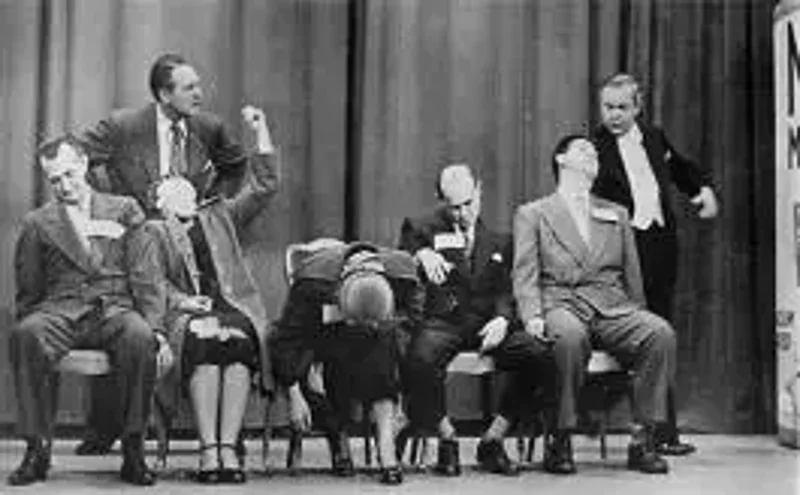
Stage hypnosis, as practiced in the 18th and 19th centuries (and even today, in some entertainment settings) is probably the root of many peoples' suspicion of hypnosis. While some practitioners (LaFontaine, for example), believed their stage acts were contributing to the clinical development of hypnosis as a medical treatment, others believed that "the show was the thing", as Shakespeare wrote.
As an entertainment, stage hypnosis was extraordinarily popular and continues to be, with varying levels of rigor applied by stage hypnotists. Some of these have been known to place "ringers" in their audiences, who stand in for legitimate audience members, performing pre-arranged "tricks" for the sake of entertainment and to enhance the performer's reputation. Ringers and stooges also serve the purpose of establishing legitimacy, thus increasing suggestibility in audience members.
Performers like these depended on three key ingredients in order to hoodwink their fans (who perhaps were completely fine with being hoodwinked, for a good night out). The first of these was social pressure. In a group setting, people tend to be much more willing to "go along to get along". Nobody wants to be the spoilsport who lets on that he or she hasn't actually been hypnotized.
The second ingredient was the careful selection of audience members to be called to stage to be hypnotized. By asking the audience to follow a suggestion, hypnotists, in concert with assistants observing the audience, could identify those most prone to suggestion and also the most extroverted (and thus entertaining) people present. Finally, deception played an important part in the spectacle of hypnosis as entertainment, with many performers employing drama and simple magic tricks to dazzle their audiences.
As we'll see later on, though, that's not the aim of hypnosis, nor its reality. In truth, hypnosis is only guided by the hypnotist. The stage hypnotist of the entertainment's heyday is, in fact, the locus classicus of the term "Svengali effect". With the hypnotist cast in the role of mysterious and all powerful puppet master, audience members would be seen to have lost control of their wills, in confrontation of the overwhelming charisma of the hypnotist. As we'll see a little later on, these practices were so widespread in the United Kingdom, that legislation was required to curtail them, which led to the Hypnotism Act of 1952.
Throughout the 20th Century and to the present day, stage hypnosis continues to attract enthusiastic audiences. One of the best known stage hypnotists is the Amazing Kreskin, who has been vocal in his opposition to the unscrupulous practices of some of his fellows, particularly the use of ringers and stooges. Despite some of the practices inherent, then, it's clear that behind the "roar of the grease paint, the smell of the crowd" there lay a solid basis for what was to become a viable and scientifically-supported clinical discipline.